What Is Off-Page SEO?
A practical guide to off-page SEO, backlinks, guest posting, digital PR, brand mentions, online reputation, and negative SEO risks.
Search engine optimization includes internal and external activities that help a website become more visible in search results. In general, SEO can be divided into on-page SEO and off-page SEO. Technical SEO is also an important part of the process because it affects how easily search engines can crawl, index, and understand a website.
In this guide, we will explain what off-page SEO is, why it matters, and how activities outside your website can influence trust, authority, rankings, referral traffic, and long-term search visibility.
What Is Off-Page SEO?
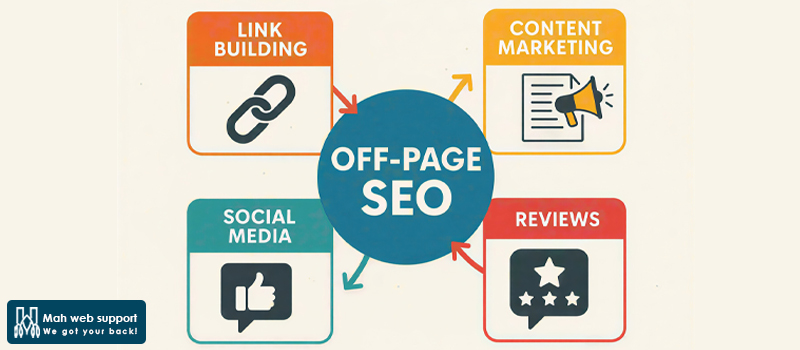
Off-page SEO refers to the actions taken outside your website to improve its authority, trust, reputation, and position in search engine results. These actions may include earning backlinks, publishing content on reputable websites, building brand mentions, improving online reputation, engaging with communities, and using digital PR to increase visibility.
Off-page SEO works together with on-page SEO. On-page SEO focuses on improving pages, content, internal links, metadata, user experience, and technical structure. Off-page SEO, on the other hand, helps strengthen how your website is perceived outside its own domain.
In simple terms, on-page SEO helps search engines understand your website, while off-page SEO helps search engines evaluate how much other websites, communities, and online sources trust your website.
What Is On-Page SEO?
On-page SEO is the process of optimizing website pages for search engines and users. The goal is to make each page clearer, more useful, more accessible, and easier to understand from both a content and technical perspective.
With proper on-page SEO, search engines can discover pages more efficiently, read their content, identify their main topic, and decide whether they are useful enough to appear in search results.
Important parts of on-page SEO include SEO-friendly content, heading structure, title tags, meta descriptions, internal linking, image optimization, page speed, and user experience. For a deeper explanation, read our complete guide to on-page SEO.
Important Off-Page SEO Techniques
Off-page SEO includes several techniques that help increase a website’s authority and visibility outside the website itself. The most important methods include quality link building, guest posting, digital PR, brand mentions, community participation, online reputation management, and monitoring harmful external signals.
The goal is not simply to collect as many links as possible. Effective off-page SEO depends on relevance, trust, authority, content value, and long-term brand credibility.
Building High-Quality Backlinks
One of the most important parts of off-page SEO is earning backlinks from trustworthy and relevant websites. A backlink is valuable when it comes from a website that is credible, topically related to your industry, and supported by high-quality content.
One common way to earn backlinks is guest posting on reputable websites. Guest posting can provide several benefits:
- Receiving relevant and high-quality backlinks
- Increasing brand authority
- Attracting referral traffic from the host website
- Introducing your expertise to a new audience
To find guest posting opportunities, you can use search queries such as:
write for us + your industryguest post + your topicsubmit an article + your nichecontributor guidelines + your industrybecome a contributor + your topic
Another method is to analyze competitors’ backlink profiles. By reviewing where competitors have earned links, you can identify websites, publications, and content opportunities that may also be relevant to your brand. Tools such as Ahrefs, Moz, and Majestic are commonly used for backlink analysis.
However, quality should always matter more than quantity. A large number of links from weak, irrelevant, or spammy websites can harm your credibility instead of improving it.
Guest Posting and Content Collaboration
Guest posting is one of the more natural and sustainable off-page SEO methods when it is done to provide real value, not simply to place a link.
In this approach, you create expert content for another website. If the content is accepted, you may be able to include a natural link to a relevant page on your own website. This link should fit the context of the article and help the reader access additional useful information.
To make guest posting effective, consider the following guidelines:
- The host website should be relevant to your industry.
- The submitted content should be original, useful, and well researched.
- Links should be natural, limited, and contextually relevant.
- Anchor text should not be overly promotional or repetitive.
- The main goal should be to create value for the audience.
Guest posting is most effective when it supports both SEO and brand authority. A strong guest article can help you build trust, reach a new audience, and demonstrate subject-matter expertise.
Private Blog Networks and PBN Risks
A Private Blog Network, or PBN, is a group of websites created or controlled with the purpose of linking to a main website. This method has been used in some SEO projects in the past, but it is now widely considered a high-risk link-building tactic.
If search engines identify a link network created to manipulate rankings, the main website may lose rankings or face manual or algorithmic action. For this reason, PBNs are generally not recommended for serious brands that want stable, long-term organic growth.
Instead of relying on artificial link networks, it is better to focus on valuable content, digital PR, partnerships with reputable websites, useful research, and natural link earning. These methods take more time, but they create stronger and more sustainable authority.
Any off-page SEO tactic that is designed only to manipulate rankings can create long-term risk. Sustainable SEO should be based on relevance, trust, and genuine value.
Commenting on Relevant Blogs
Blog commenting can support off-page SEO, but it should not be treated as a primary link-building strategy. The main purpose of blog commenting should be real participation in a relevant discussion and building connections within your professional community.
A useful comment can add a new perspective, answer a question, or share an experience related to the article. If linking to one of your pages genuinely helps complete the discussion, the link may be useful. However, placing repetitive or promotional links across many blogs can quickly become spam.
When using blog comments, follow these principles:
- Make sure the comment is relevant and valuable.
- Avoid copying the same comment across multiple websites.
- Add a link only when it helps the reader.
- Consider the authority and quality of the host website.
- Remember that nofollow links can still support referral traffic and link profile diversity.
Backlink analysis tools can also help you find relevant sources and understand where competitors are earning links. This can reveal useful opportunities for outreach, collaboration, and content improvement.
Forums and Q&A Websites
Forums, professional communities, and Q&A websites can help increase brand visibility and connect you with a targeted audience. These platforms are usually built around specific topics, where users discuss problems, experiences, and questions.
Direct promotional link building usually performs poorly in these spaces and may be removed by moderators. A better approach is to provide accurate, useful answers first and only link to your own content when it genuinely supports the answer.
To use forums and Q&A platforms effectively:
- Review the rules and quality standards of each community.
- Provide complete, practical, and honest answers.
- Avoid making links look like advertisements.
- Do not repeat the same link in multiple answers.
- Focus on helping users and building authority.
This method is often time-consuming, but when done properly, it can support brand awareness, targeted referral traffic, and meaningful relationships with real users.
Digital PR
Digital PR is one of the most valuable parts of off-page SEO. Its purpose is not only to earn backlinks, but also to increase brand credibility, visibility, and trust across reputable online sources.
Digital PR activities may include:
- Publishing important company news on relevant media outlets
- Building relationships with industry publications and journalists
- Publishing non-confidential business data, reports, or insights
- Creating link-worthy assets such as research reports or expert guides
- Engaging with audiences and industry professionals on social platforms
- Sharing brand stories, customer experiences, or successful case studies
In many cases, a useful report, expert insight, or well-timed news story published through a reputable industry source can be more effective than direct advertising. It may also be referenced by other websites, helping your brand earn natural mentions and links over time.
Paid Backlinks and Sponsored Content
Some websites publish paid links or sponsored content. This can seem like a fast and attractive way to build links, but it should be approached with caution.
Buying backlinks from low-quality, irrelevant, or spam-heavy websites can damage SEO performance. If links look artificial, excessive, or created only to manipulate rankings, search engines may ignore them or, in more serious cases, the website may experience ranking problems.
If sponsored content is used, consider these guidelines:
- The publishing website should be reputable and relevant.
- The content should provide real value to readers.
- Links should be natural, limited, and contextually useful.
- Anchor text should not be over-optimized.
- Avoid sudden, large-scale link publication.
- Review the host website’s quality, real traffic, and topical relevance.
In general, sustainable link building should be based on authority, relevance, and content value, not simply on buying a large number of links.
Negative SEO
Negative SEO refers to harmful actions intended to damage a website’s rankings, reputation, or search performance. These actions may include spam backlinks, copied content, technical attacks, attempts to remove valuable backlinks, or other signals designed to make a website look suspicious.
One common form of negative SEO is creating a large number of low-quality backlinks from spam websites. In this situation, a competitor or malicious actor may try to make your link profile appear unnatural.
Another method is attempting to remove valuable backlinks. Someone may pretend to represent your brand and contact websites that link to you, asking them to remove those links.
To reduce the risk of negative SEO, it is important to review your backlink profile regularly, identify suspicious links, use monitoring tools, and take corrective action when necessary.
Conclusion
Off-page SEO includes the activities that happen outside your website and help improve authority, trust, reputation, and online visibility. High-quality backlinks, digital PR, guest posting, community participation, brand mentions, and online reputation management are all important parts of a strong off-page SEO strategy.
However, off-page SEO should be handled carefully. Risky tactics such as PBNs, low-quality paid links, and mass link building can harm a website in the long term. The better approach is to focus on valuable content, relationships with reputable sources, natural links, and real brand authority.
When on-page SEO, technical SEO, and off-page SEO work together, a website has a much better chance of achieving stable rankings, attracting qualified traffic, and building long-term trust in search engines.